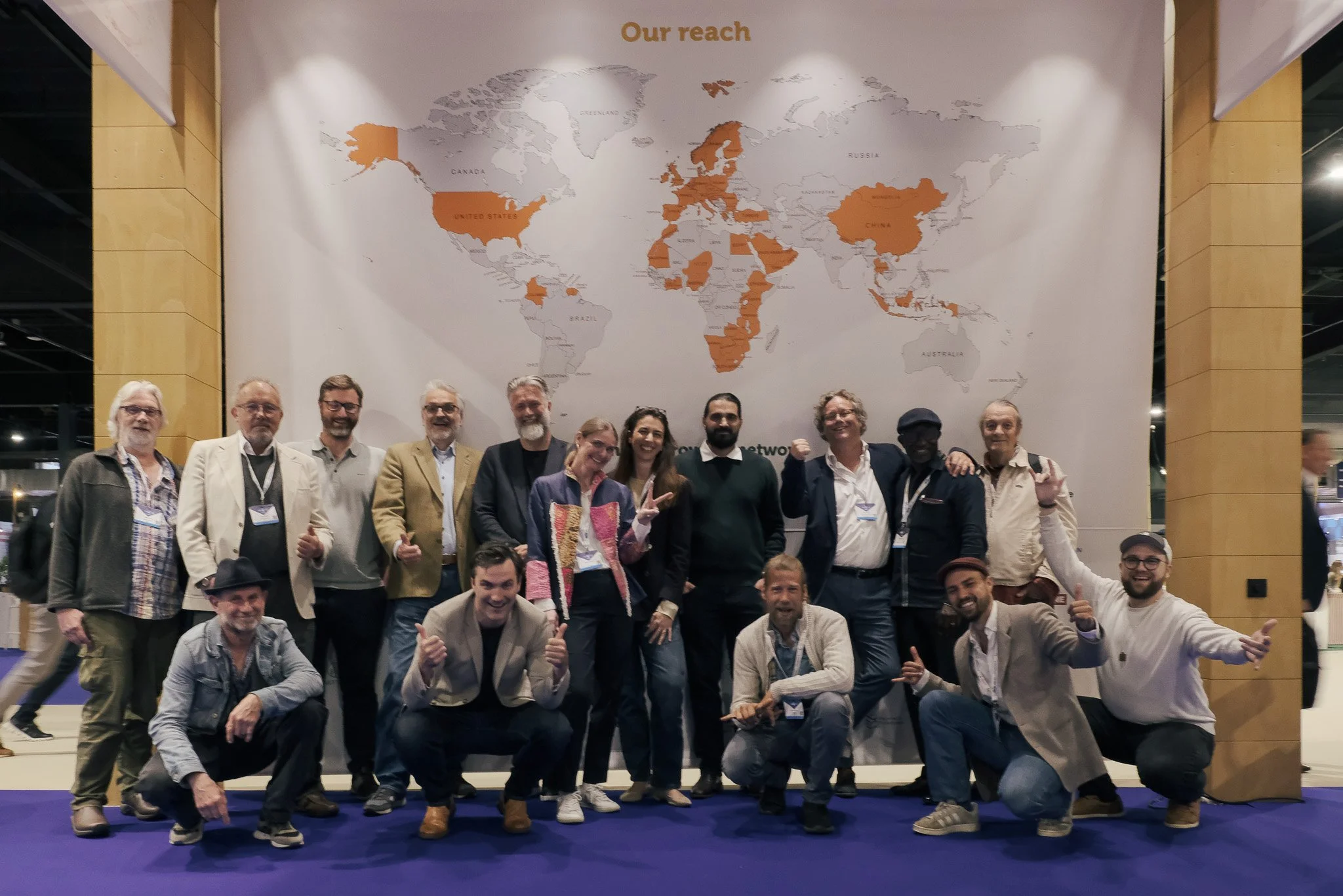
The final day of the Cities Leading Food Production programme at VIV Europe 2026 in Utrecht delivered strong global perspectives and forward-looking insights. Sessions focused on real-world challenges and solutions from Europe, the Middle East, Africa and the US, nature-based restoration tools, and a closing reflection on building resilient food systems. The day reinforced that practical, collaborative, and locally adapted approaches are essential for robust regional food networks.
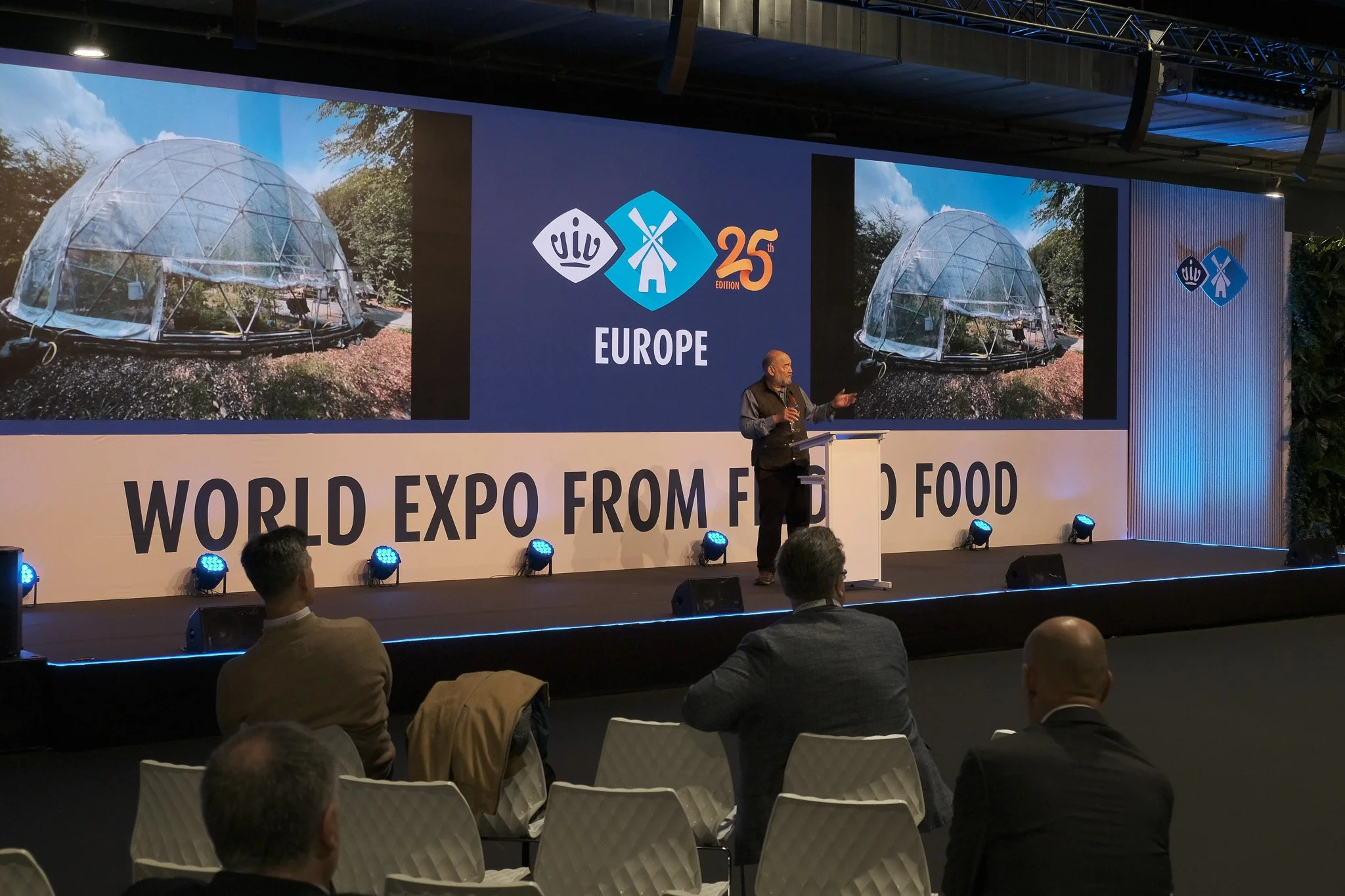
John D. Liu: The Flourishing Path of Ecosystem Restoration, Soils & Water Cycles
John D. Liu is a Chinese American film-maker and ecologist. He is also a researcher at several institutions and founder of the Ecosystem Restoration Communities. John kicked off the day with his main stage seminar on his inspirations and his extensive experiences with real, practical and achievable ecosystem restorations around the world, and he provided a preview of his workshop (see below) with Ties van der Hoeven of The Weather Makers on the effectiveness of Eco-Oases and Katabatic Towers.
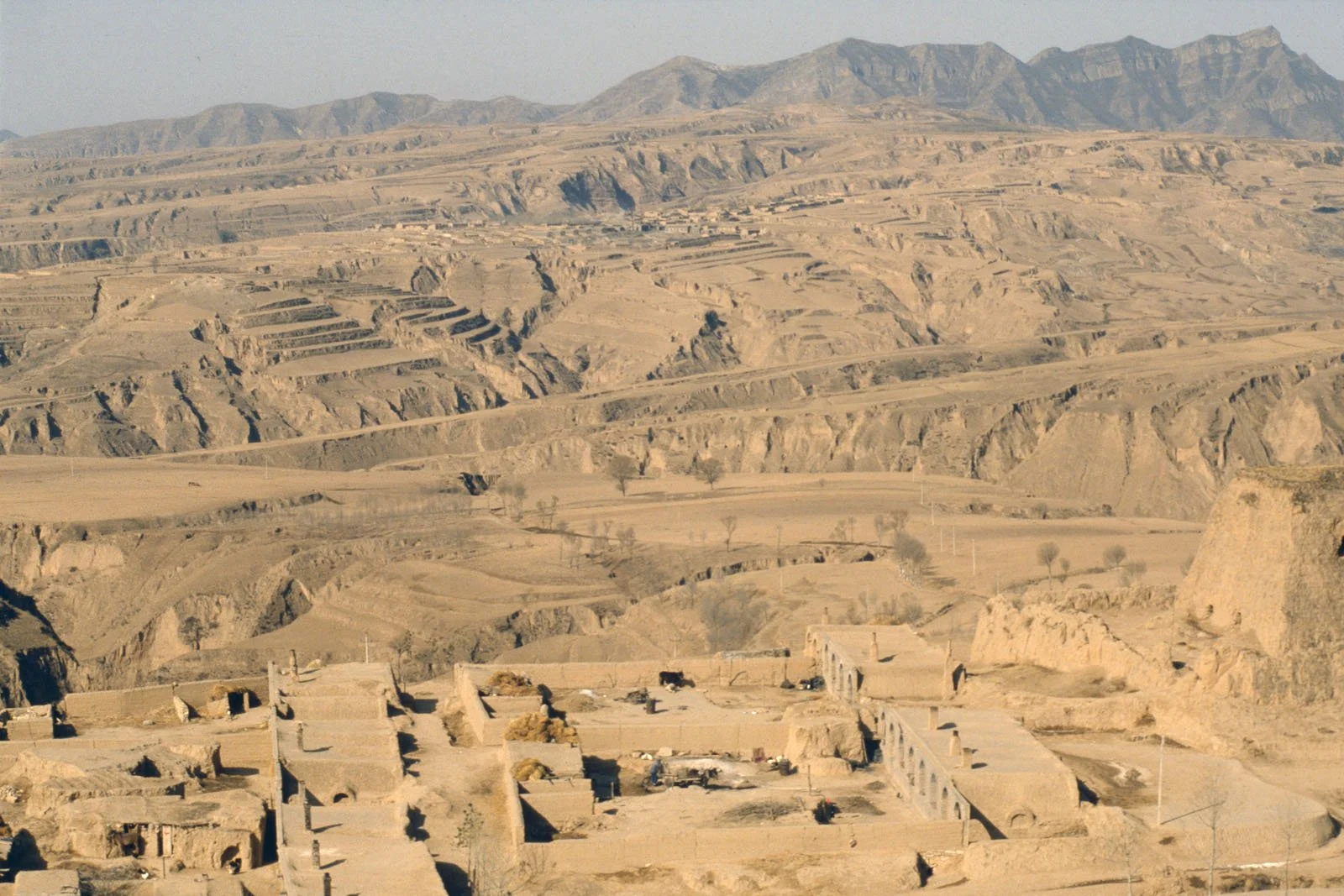
Loess Plateau, China
“When I went to the cradle of Chinese civilization, I saw one of the most eroded landscapes on Earth, stripped bare and seemingly desert, despite 300 to 700 millimeters of annual rainfall—enough for temperate forest. The problem wasn’t rain, it was infiltration and retention. The heated bare soil created thermic drafts that pushed moisture higher into the atmosphere so it didn’t fall as rain.”
“As I began to think this through, I was invited to speak at scientific gatherings, which felt strange for a college dropout who went there just to film. I expected scientists to correct me, but instead they funded more fellowships so I could document similar patterns worldwide, which made me increasingly confident in what I was seeing. That led to invitations in Africa to share these insights with different countries.
This had a profound impact in Rwanda and Ethiopia, both scarred by famine and genocide. Speaking with presidents, prime ministers, cabinets, parliaments, academics, students, and the press—and showing films to the public—meant ‘ecological function’ became a national conversation. I realized policy and action could align around restoring perennial polycultures and the hydrological cycle, and that functioning ecosystems are always more productive—and that this is real work.”
“Instead of just circulating money and pretending that’s progress, we might as well do the work that actually restores ecological function. That insight helped seed a network of ecosystem restoration communities over the past decade—nearly 100 voluntary groups where people simply go and do what’s needed. The more people share this collective intention and act on it, the more it spreads. You don’t have to tell people what to do; once they understand, they wake up each day already knowing.”
Environmental Stewardship and Systemic Change in the Middle East: Real Challenges and Real Solutions from Tatiana Antonelli Abella
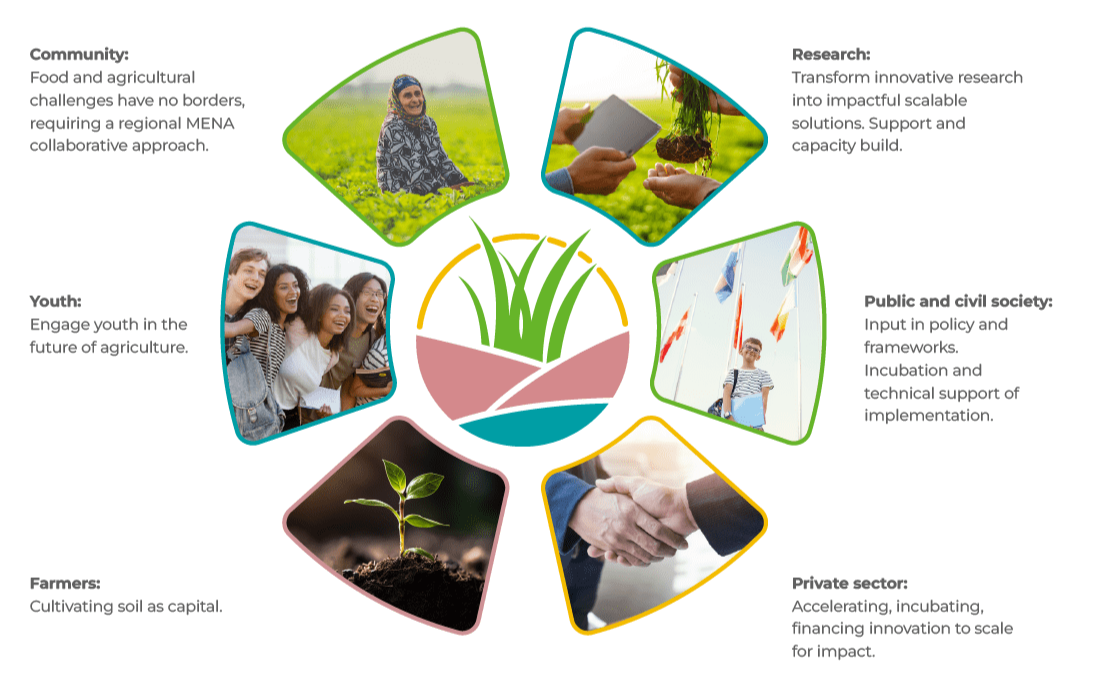
Tatiana Antonelli Abella, CEO of Goumbook, hosted an honest and inspiring roundtable on ‘Environmental Stewardship and Systemic Change for Regenerative Agriculture’ in the MENA (Middle East / Northern Africa) region.
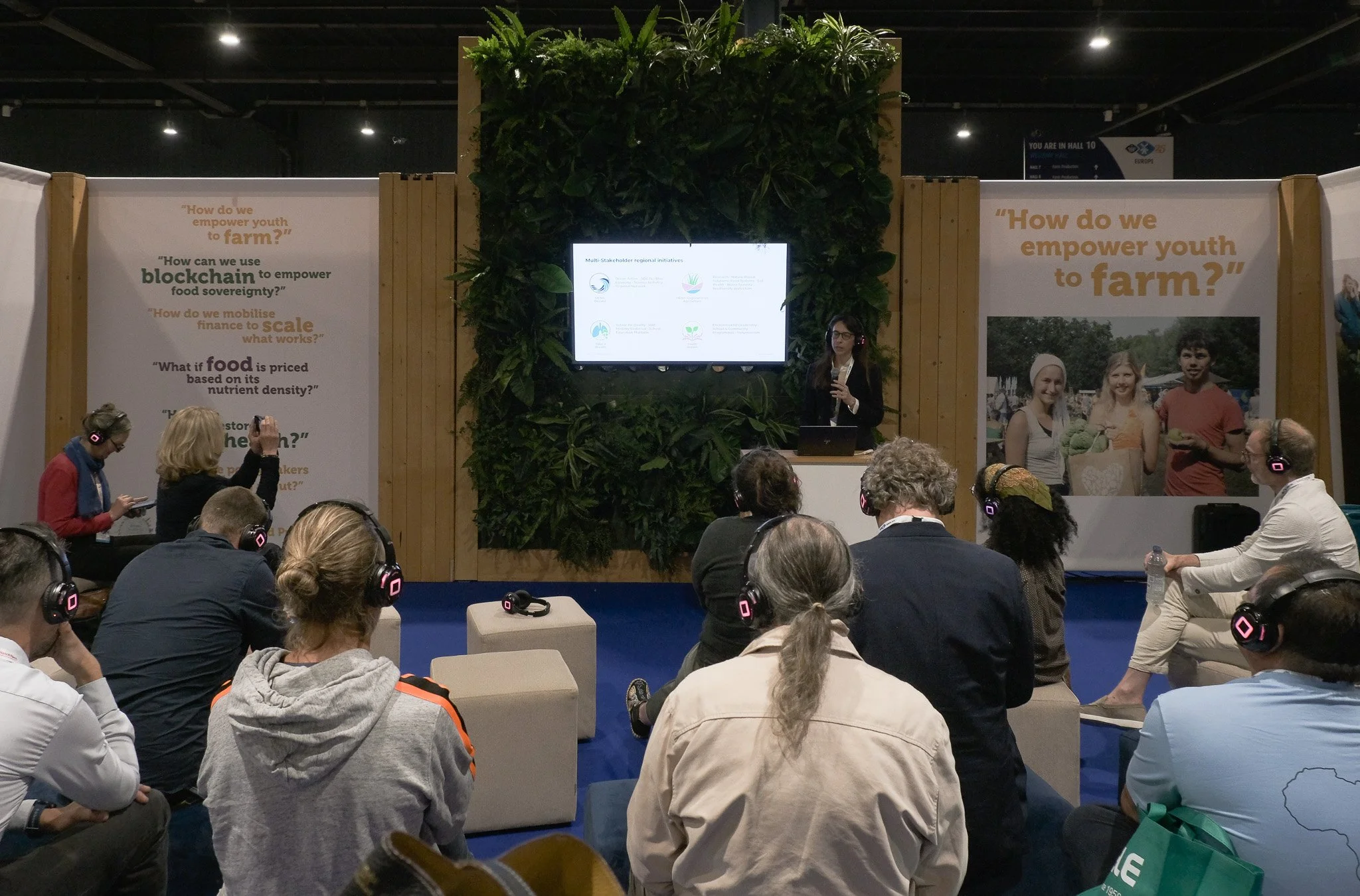
Tatiana founded Goumbook 17 years ago as a social enterprise in the UAE. What started as awareness campaigns has grown into serious work on policy, research, innovation, and community action. She and her team are focused on turning big environmental challenges into practical opportunities — especially through regenerative agriculture.
The Reality on the Ground
The Middle East faces some of the toughest conditions for farming anywhere: temperatures hitting 60°C, seawater at 38°C, and extremely high salinity. Western technologies often fail here. Local science and local solutions are essential.
Tatiana emphasised that the region isn’t a barren desert — it’s a living lab with incredible biodiversity, including corals that survive temperatures deadly to others elsewhere. There’s huge potential, but it’s often overlooked globally.
Farmers in the region are aging (average around 57), and young people aren’t choosing agriculture. Traditional crops that are heat- and salt-tolerant and highly nutritious have largely disappeared. Diets have shifted to processed foods and imports. The good news? Countries like Saudi Arabia are showing what’s possible with diverse, resilient farming.
From Awareness to Action
Goumbook’s work has evolved:
Early campaigns planted trees in deserts and mangroves along coasts.
They’ve tackled plastic pollution and waste through local startups (including turning cigarette butts into construction materials).
Their MENA Regenerative Agriculture Initiative, supported by the European Institute of Technology Food, is now moving from definitions to real outcomes — documenting what works for local farmers and scientists under harsh conditions.
A Venture Program supports accessible, science-backed innovations. More than 50% of the winners have been women. The focus is on practical solutions farmers can actually use — not expensive high-tech fixes that don’t survive the climate.
Policy, Trust, and the Bigger Picture
Tatiana was frank about challenges:
Government subsidies often support the wrong crops (like cucumbers and tomatoes) instead of resilient local varieties.
Social enterprises struggle for local funding despite international recognition.
Trust is key — and hard to build. People sometimes distrust local produce, assuming it’s full of chemicals when regulations are actually strict.
Geopolitical issues add pressure. Recent events closing key shipping routes have highlighted how dependent the region is on imports for food and fertilisers. Regenerative agriculture and local food systems are becoming urgent for resilience.
Youth and Cultural Shifts
Tatiana stressed the social side. Young people need to see agriculture as an attractive, meaningful career. Education, school gardens, and clear success stories are vital. Cultural reconnection with heritage crops and traditional diets could improve both health and food security.
Why This Matters
For farmers in tough climates: There are proven local approaches that work better than imported models.
For students and young people: Huge opportunities in research, innovation, policy, and entrepreneurship in sustainability.
For professionals, advisors, and policymakers: Supporting local science, updating subsidies, and building trust through demonstration projects can drive real change.
Tatiana and Goumbook are showing that even in extreme conditions, regenerative agriculture isn’t just possible — it’s necessary. By focusing on outcomes, collaboration, and local realities, the MENA region can become a model for resilience.
If you work in food systems, sustainability, or development — especially with interest in arid regions — it’s worth connecting with Goumbook. Their work on living labs, youth action, and policy influence offers practical lessons for anyone trying to build better food systems.
The session ended with a clear call: let’s share knowledge, support local solutions, and work together. The Middle East may face big challenges — but it also holds big opportunities.
Africa: Empowering Youth and Farmers – Insights from Fadel Ndiame and Samwel Oando
Fadel Ndiame and Samwel Oando from the Partnership for African Social and Governance Research (PASGR) led an engaging roundtable on empowering youth and farmers across Africa.
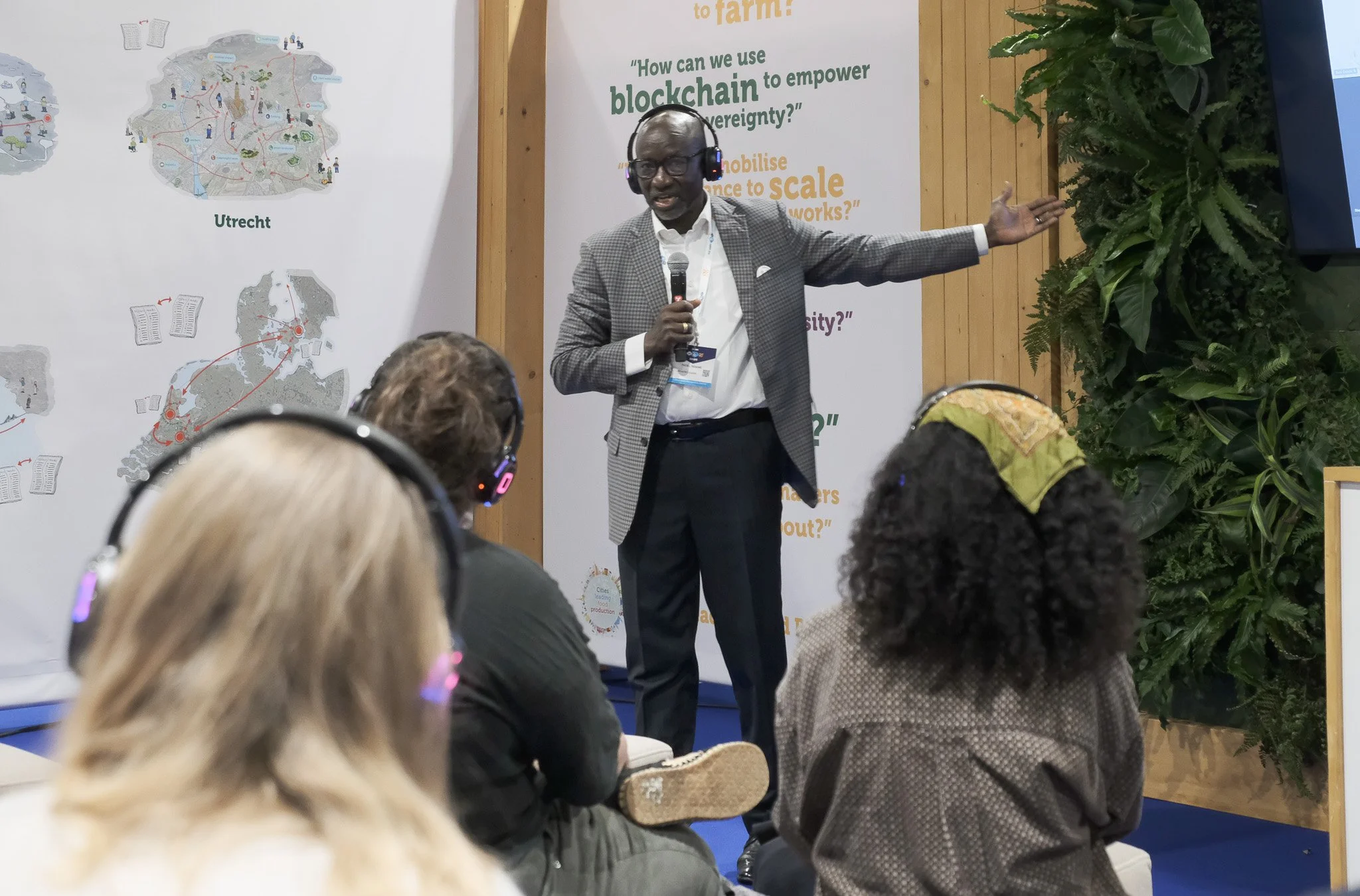
Fadel, with decades of experience guiding farmers and youth, and Samwel, focused on evidence-to-policy work, shared practical approaches from their Utafiti Sera initiative. Their message was clear: real change happens when research, policy, and local communities work together — and when young people are truly at the centre.
Utafiti Sera: Evidence That Leads to Action
Utafiti Sera (Swahili for “research for policy”) creates spaces where researchers, farmers, government officials, businesses, and youth come together to tackle real problems. Instead of top-down policies, they co-create solutions based on local realities.
In Nairobi, for example, this approach helped the city government finally develop an urban agriculture policy after more than 10 years. The policy now supports inclusive food production, traceability, and youth involvement in agribusiness.
They’ve applied this model across multiple countries and topics — from youth employment to urban governance and food systems. The focus is always the same: generate trustworthy evidence, build consensus, and turn it into practical policy and action.
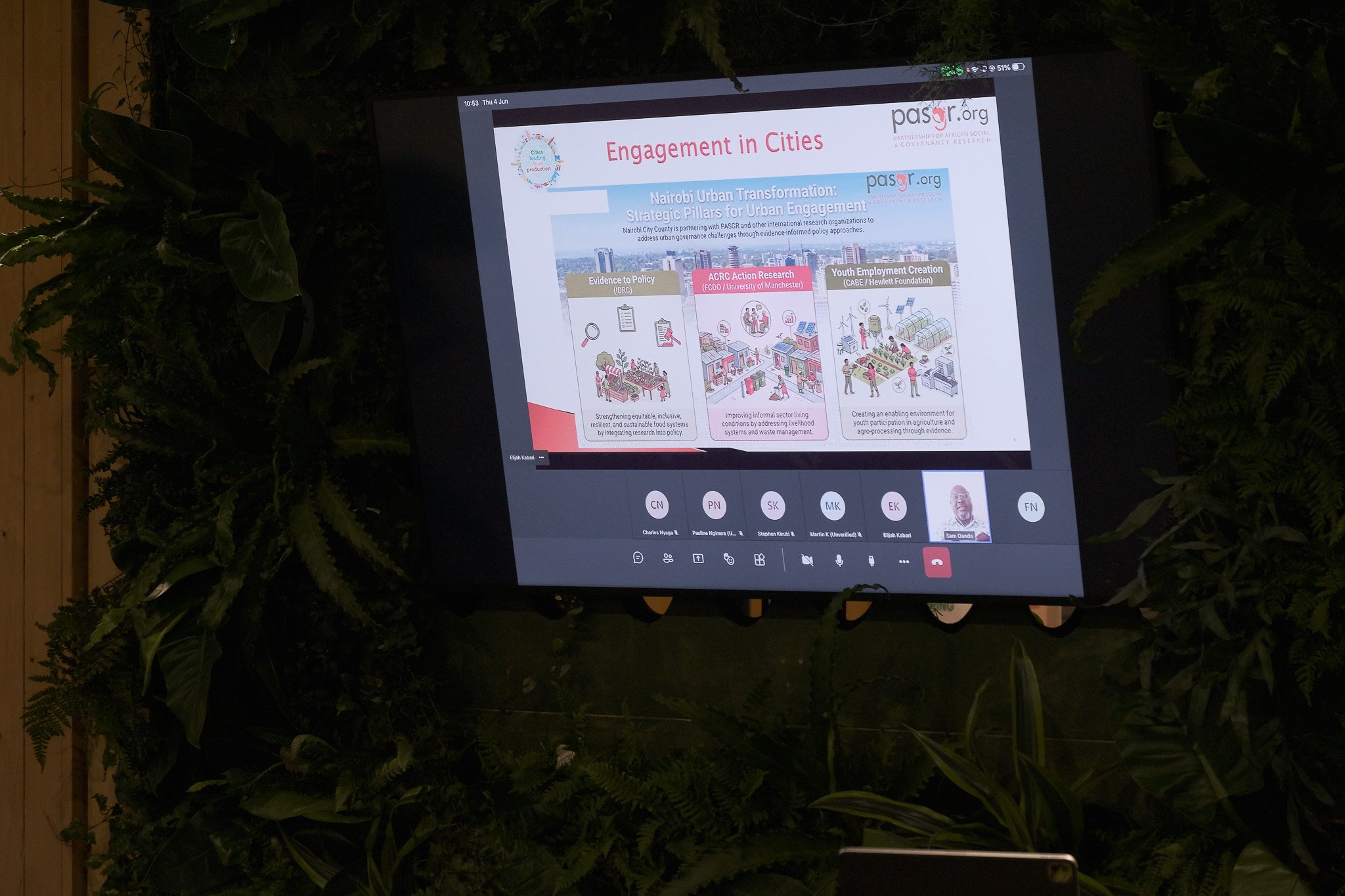
Samwel Oando presenting through a live stream from Nairobi.
Youth at the Heart of Change
Youth employment came up as one of the biggest challenges — and opportunities — in Africa. PASGR’s Youth Employment Creation initiative works to fix skills mismatches and create real pathways for young people in agriculture and agro-processing.
The speakers stressed that youth need more than training. They need to be part of the conversation, shaping policies and starting businesses. By involving youth champions across different countries and commodities, they’re building networks that can drive real change from the ground up.
Fadel highlighted a powerful example: a young woman who saw mangoes rotting and started a business buying from farmers and exporting. With support from local government and networks, she’s now creating opportunities for others. Small wins like this show what’s possible when people are empowered.
Building Trust and Local Economies
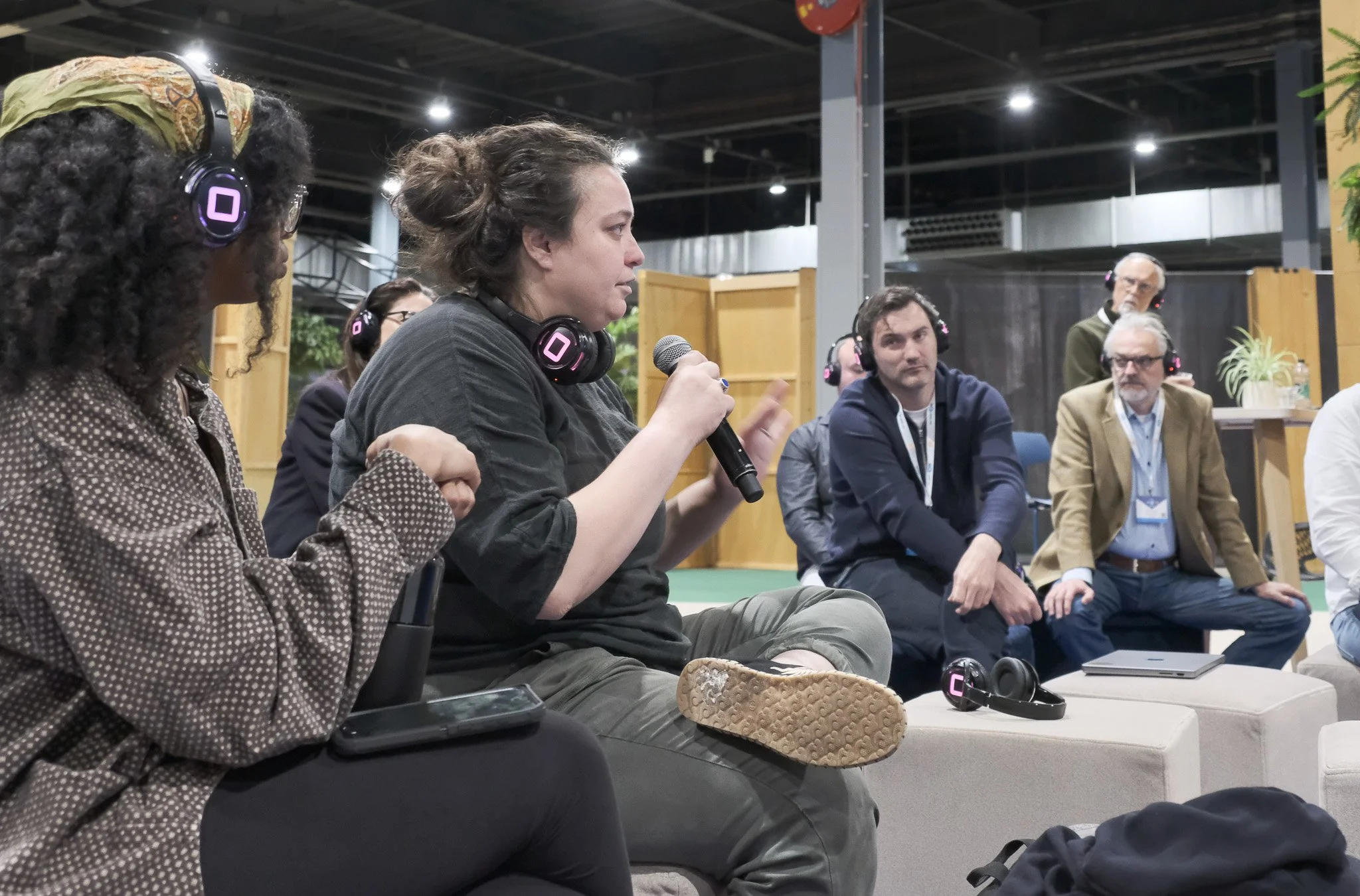
A recurring theme was the need to rebuild trust. Farmers often distrust government programs, and policies don’t always reflect on-the-ground realities. The Utafiti Sera model brings everyone to the same table to understand challenges together and find shared solutions.
They also talked about the importance of local economies. Instead of extractive projects that end when funding stops, interventions need to strengthen local value chains, create lasting livelihoods, and keep money circulating within communities.
Fadel put it simply: we need to shift from a mindset of “obligation to resources” (just spending money) to “obligation to results” — clear outcomes that benefit people and the environment.
Why This Matters
For students and young people: There are real opportunities to get involved in agriculture, policy, and entrepreneurship. Your voice and energy are needed.
For farmers: Stronger networks, better policies, and support for local markets can improve incomes and resilience.
For professionals, advisors, and NGOs: Co-creation models like Utafiti Sera offer practical ways to make research and policy more relevant and effective.
Fadel and Samwel made it clear — Africa’s food systems face big challenges, but there’s also huge potential when youth, farmers, researchers, and governments collaborate with trust and shared goals.
If you work in food systems, youth development, or policy — especially with connections to Africa — it’s worth exploring PASGR’s work and the Utafiti Sera approach. Real transformation starts with listening, co-creating, and acting together.
The session ended with a strong sense of shared purpose: we can build better food systems by putting people — especially young people and farmers — at the centre.
Eco Oases and Katabatic Towers: Simple, Positive Solutions for Ecosystem Restoration and Healthy Agriculture
John D. Liu and Ties van der Hoeven of The Weather Makers delivered an inspiring workshop on practical ways to restore ecosystems and support food production using water cycle science.
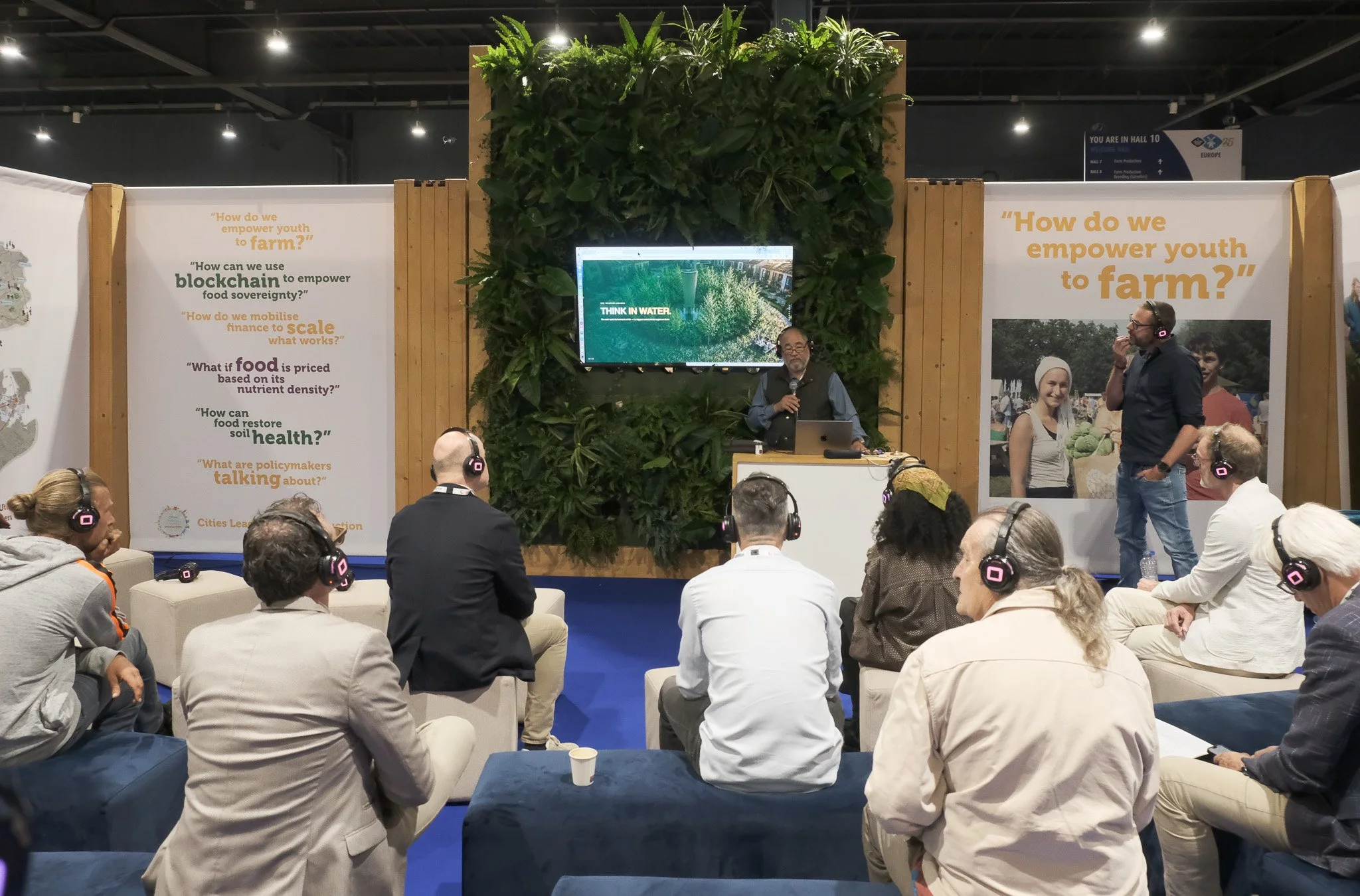
John, a world-renowned ecological restoration expert, and Ties, an ecological engineer, shared straightforward, hopeful approaches grounded in nature’s own processes. Their message was clear: we already have the tools to cool landscapes, boost biodiversity, and grow healthier food — even in challenging climates.
Learning from the Past, Acting in the Present
John opened by honouring Professor Millán Millán, whose early warnings about changing moisture cycles and extreme weather were largely ignored, leading to billions in damages from floods and droughts. The lesson is urgent: we must listen to science and act on water’s central role in climate and ecosystems.
Ties explained that when humidity drops too low, plants close their stomata, halting photosynthesis and reducing natural production by up to 40% in parts of Europe. This creates vicious cycles of drought and heat stress. The good news? We can intervene simply and effectively.
Two Powerful, Low-Tech Innovations
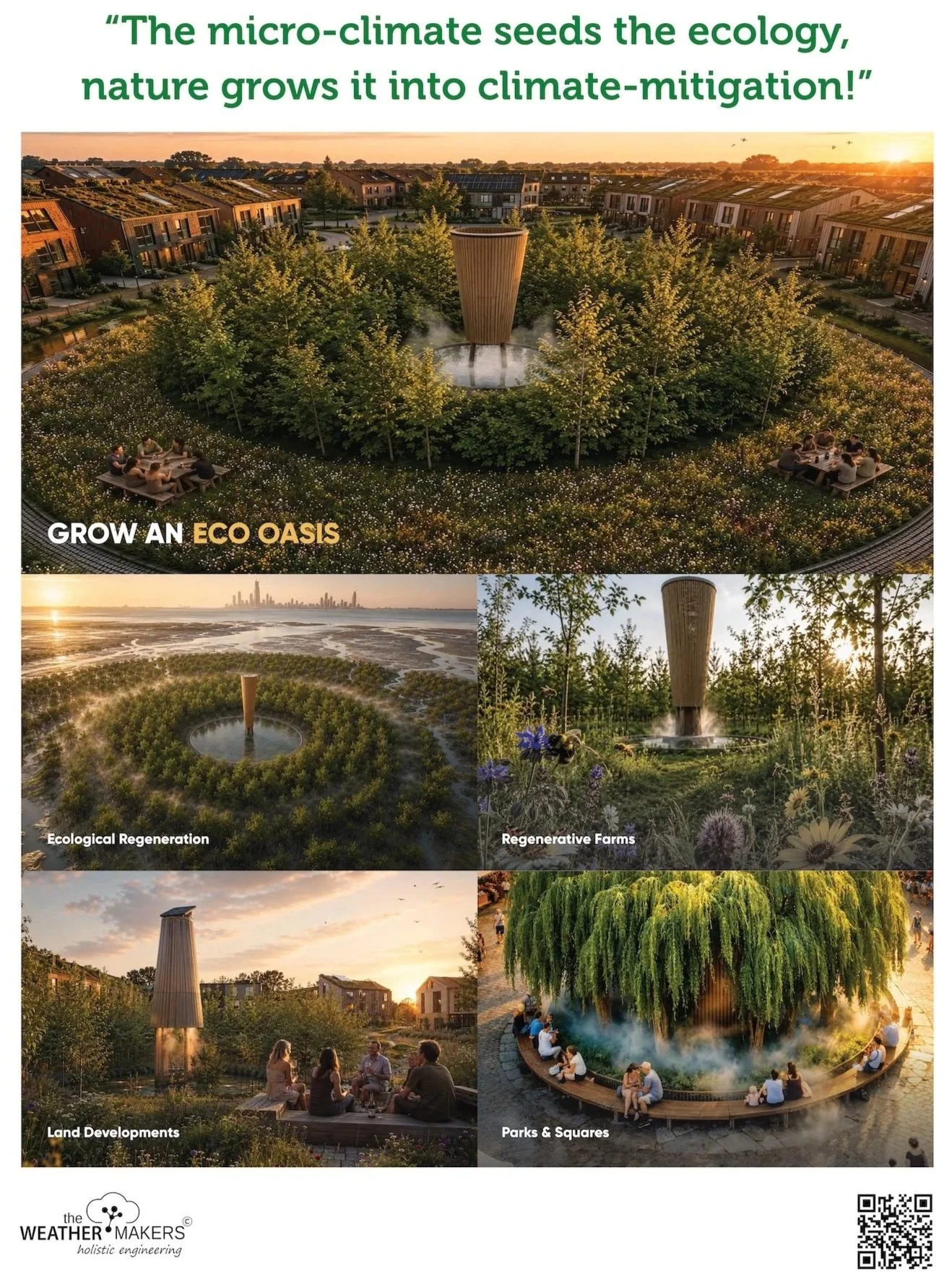
The Eco Oasis Dome creates a controlled mini-ecosystem where water flows through connected habitats, purifying itself while building biodiversity and resilience. It demonstrates how water links everything in nature.
The Katabatic Tower is even simpler: spray water at the top, and as it evaporates, it cools and humidifies the air, creating a downward wind that can lower temperatures by 7–15°C. These towers support plant growth, reduce heat stress, and can be scaled from small gardens to larger farms or urban spaces. They work with seawater or freshwater and show strong potential for energy generation and soil restoration.
Pilot projects in the Netherlands already show higher yields in greenhouses and promise for orchards, offices, neighbourhoods, and parks. The technologies are accessible, relatively low-cost, and designed to empower local communities and farmers.
Education, Community, and Scalability
Both Ties and John emphasised education and grassroots action. Simple water cycle demonstrations help children understand ecosystems. Training programmes for young people and community-based enterprises can create jobs while restoring landscapes. The goal is to give people the tools to create their own resilient microclimates.
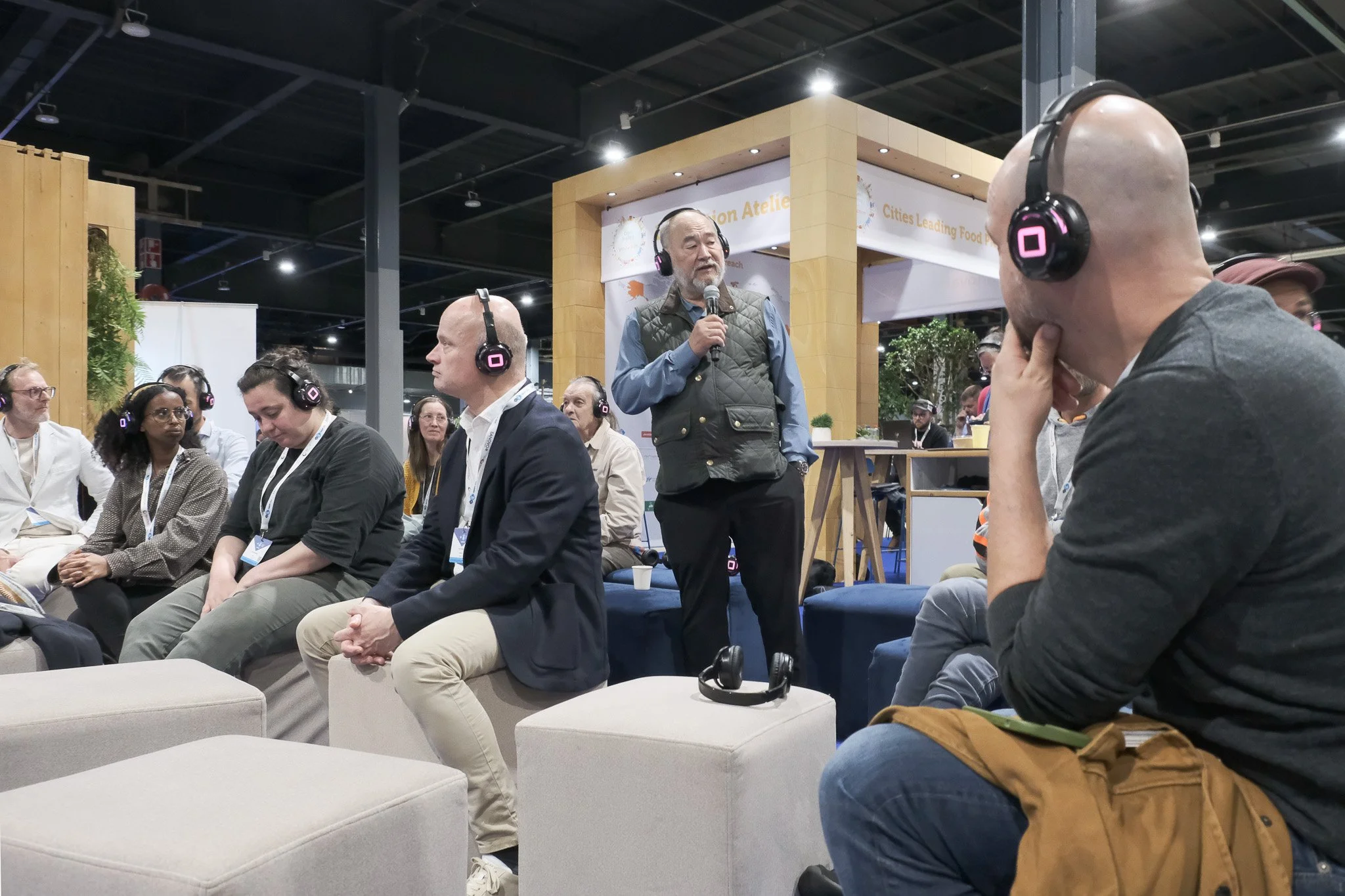
Audience questions touched on scaling, wildfire prevention, and integration with education. Ties and John responded positively, noting strong farmer demand due to heat stress and openness to collaborations across Europe and beyond.
Why This Matters Now
These solutions are positive and empowering. They don’t require waiting for perfect policy — they work with nature’s own processes to cool environments, support photosynthesis, increase biodiversity, and strengthen food production. In a time of climate extremes, geopolitical risks, and aging farmer populations, such practical tools offer real hope for resilience and regeneration.
Policymakers, NGOs, farmers, and local governments should take note: supporting these kinds of nature-based innovations can deliver multiple benefits — healthier food, cooler cities, restored ecosystems, and stronger communities.
The workshop ended on an optimistic note. As John and Ties showed, by working with water and giving nature the right conditions, we can accelerate ecosystem restoration and build more resilient agricultural systems — starting today, in our own backyards and fields.
If you work in agriculture, policy, restoration, or community development, these ideas are worth exploring further. Simple, scalable, and rooted in science — exactly what we need.
Common Source: Building Resilient Food Systems – Closing Roundtable
The Cities Leading Food Production-programme at VIV Europe 2026 in Utrecht brought together farmers, agribusiness, advisors, policymakers, processors, researchers, and innovators for three days of honest dialogue on the future of agriculture and food systems. Across multiple sessions, one message stood out clearly: real progress comes through collaboration, practical action, and a shared focus on regenerative practices that strengthen food security and resilience.
The Urgency and the Opportunity
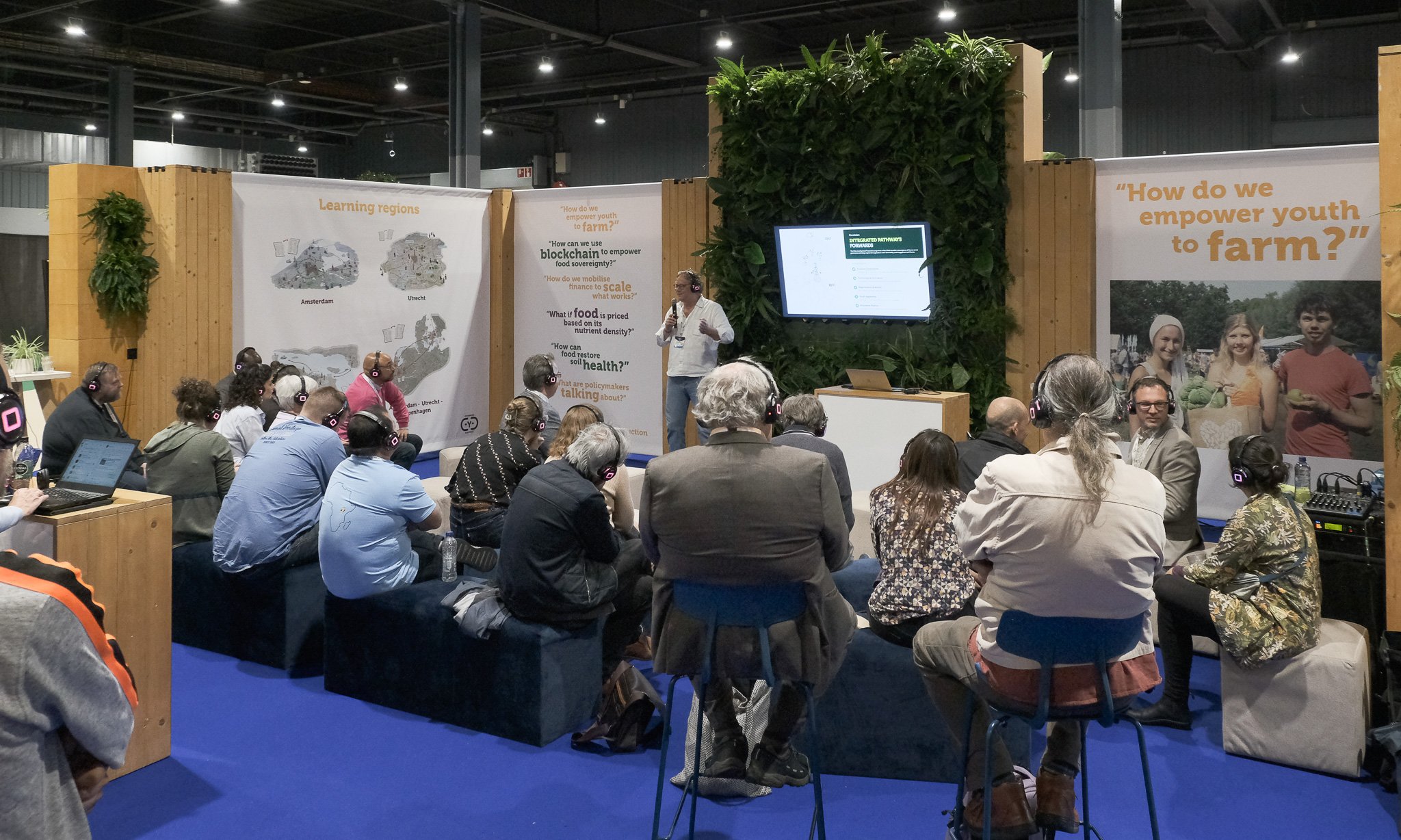
Mark Frederiks of Common Source opened the final roundtable session by acknowledging the challenges: struggling farmers, climate pressure, fragmented systems, and the urgent need to move beyond short-term projects. Yet he also highlighted the energy on the ground — regenerative agriculture movements, youth initiatives, living labs, and short supply chain efforts emerging worldwide.
The transformation of our food system is not optional. It requires reconfiguring cities and regions around both value (economic facts) and values (human and ecological relationships). Cities, where most people live and make decisions, are central to this shift.
Knowledge, Innovation, and Farmer-Centric Approaches
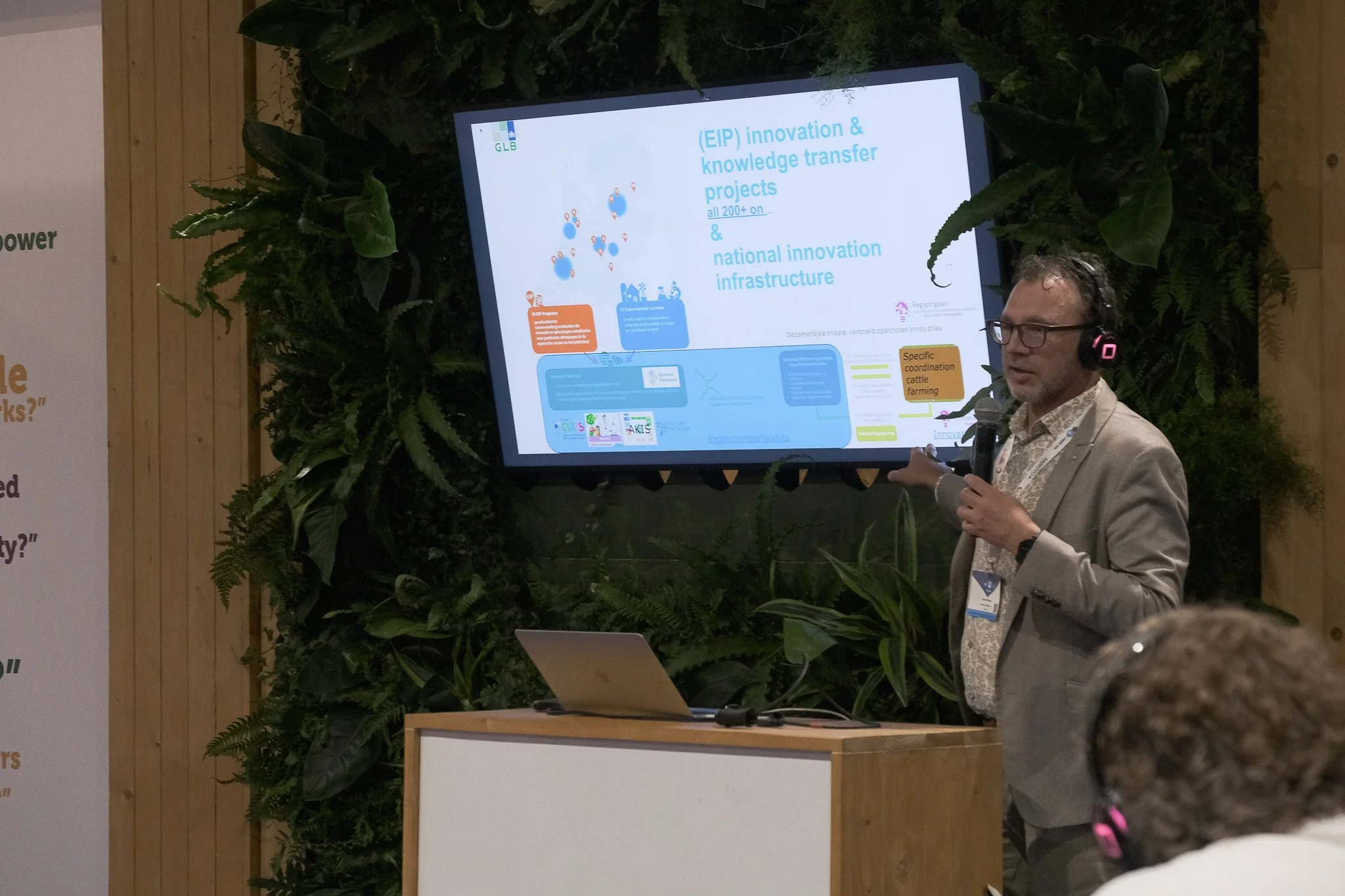
Jeroen Nagel of Regieorganisatie GLB provided a strong overview of the Dutch AKIS (Agricultural Knowledge and Innovation System). The shift from linear knowledge transfer to multi-actor collaboration is delivering results: over 200 innovation projects, expanding Field Labs (living labs), and strong links between practice, research, and policy. The emphasis on farmer-oriented, demand-driven solutions offers a model for other regions.
Mark Frederiks continued by stressing the need to integrate grassroots movements with formal structures. Living labs serve as bridges — connecting farmers, advisors, policymakers, and communities. Biomimicry-inspired governance, digital tools like blockchain for transparency, and shared infrastructure for funding were presented as ways to move beyond project cycles and create lasting change.
Youth, Local Economies, and Regenerative Models
Several sessions of the Cities Leading Food Production programme highlighted youth engagement as critical. Initiatives like Grounded demonstrate how festivals, summer camps, and community hubs can activate young people. The need for clear career pathways combining practical farming with technology was a recurring theme.
Marcel van Silfhout shared his Graangeluk project — reviving ancient grains, innovative cattle grazing, and building local value chains for bread and beer. His work shows how circular systems and regional collaboration can restore landscapes while creating viable businesses.
Jacob van den Borne illustrated precision farming at scale: drones, sensors, and data platforms helping a small team manage thousands of hectares efficiently while reducing inputs and improving soil health.
Blockchain, Data, and Systemic Design
Asgeir Oskarsson from the BSV Association showed how blockchain can rebuild trust in food chains — enabling verifiable traceability, fairer payments, and reduced intermediaries. Real examples, such as Alexander Mann’s vineyards in Virginia using sensor data anchored on blockchain, demonstrated practical benefits for quality, insurance, and consumer confidence.
Dirk Wascher led the ‘Designing the City’ session — using data tools to understand local foodscapes, identify opportunities for circular economies, and plan more resilient regional systems. The emphasis was on balancing local production with broader needs, integrating cultural and landscape values alongside technical data.
Africa and the MENA Region: Local Realities, Global Lessons
Fadel Ndiame and Samwel Oando from PASGR shared powerful examples from Africa. Their Utafiti Sera approach brings researchers, farmers, policymakers, and youth together to co-create evidence-based policies. Youth employment in agribusiness and rebuilding trust through local action were central themes.
Tatiana Antonelli Abella from Goumbook highlighted the MENA region’s extreme conditions and the need for locally adapted regenerative agriculture. Despite harsh climates, there is huge potential in heritage crops, local innovation, and youth engagement. Geopolitical risks make resilient local food systems more important than ever.
Common Threads and the Way Forward
Across all sessions, several themes emerged clearly:
Regenerative practices improve soil, biodiversity, water retention, and resilience while offering economic benefits.
Collaboration and living labs are essential for sharing knowledge, testing solutions, and adapting quickly.
Data and technology, used thoughtfully (precision tools, blockchain, mapping), can support better decisions and transparency.
Youth and farmers must be at the centre — with clear pathways, mentorship, and support.
Policy and finance need to de-risk transitions and reward sustainable outcomes rather than lock in old systems.
Common Source and similar platforms can help connect initiatives, secure data sovereignty, and enable regional cooperation.
The programme showed that while challenges are real, momentum is building. From Dutch precision farmers to African policy platforms, from blockchain-enabled traceability to landscape-level design — practical solutions exist.
For everyone in agribusiness — whether growing, processing, advising, selling, buying, or shaping policy — the invitation is the same: connect, collaborate, and contribute to building more resilient, regenerative, and fair food systems.
Cities Leading Food Production
The three days of Cities Leading Food Production left participants with inspiration, new connections, and concrete ideas. From nutrient density and youth activation to global resilience and landscape restoration, the programme demonstrated that resilient regional food systems are being built today — through collaboration, practical action, and shared learning.
The seminars, workshops and roundtables showed that by working together across sectors and borders, we can strengthen food security, support farmers, engage youth, and create lasting positive change.
We like to thank all speakers, participants, partners, and not in the least the VIV team and Koninklijke Jaarbeurs for their support and a great conference. Cities Leading Food Production is proud to continue facilitating these exchanges with our partners. Farmers, collectives, municipalities, NGOs, advisors, experts, and policymakers — you are invited to stay involved and contribute to building living, resilient food regions together.
Let’s keep the momentum going.